

You say you want one thing, then choose another.
You want the honest conversation, but you stay polite. You want rest, but you say yes again. You want to lead with confidence, but you soften your message, delay the decision, or hand your authority to someone else’s reaction. This is often how learned emotions shape daily choices – not through dramatic moments, but through ordinary ones.
A learned emotion is not fake. It is real, felt, and immediate. But it may not be coming from what is happening now. It may be coming from what your mind learned an emotion means, when it should appear, and what you must do once it appears. That is why smart, capable people can feel trapped by patterns that make no logical sense.
What learned emotions really are
Most people think emotions simply happen in response to life. Sometimes they do. But many emotional reactions are trained over time.
If you grew up learning that disagreement leads to rejection, tension may quickly become fear. If you learned that being needed makes you valuable, someone else’s disappointment may trigger guilt before you’ve even decided whether you’ve done anything wrong. If praise came only when you performed, slowing down can feel uncomfortable, not because rest is bad, but because your system learned that worth is tied to output.
This matters because the emotion itself is rarely the whole story. The more important question is, what has this emotion been trained to mean?
That is where people get stuck. They assume, “If I feel guilty, I must be doing something wrong.” Or, “If I feel anxious about this choice, it must be the wrong choice.” Or, “If I feel uncomfortable speaking up, I probably shouldn’t.”
Not necessarily. Sometimes the emotion is not a signal of truth. It is a thought in the moment, coming out of conditioning.
How learned emotions shape daily choices at work and home
The impact shows up in small decisions all day long.
At work, someone avoids giving direct feedback because discomfort feels dangerous. A leader overexplains because confidence feels too exposed. A business owner delays raising prices because someone else’s disapproval feels heavier than their own clarity.
At home, a parent snaps after a minor mess, not because of the mess, but because disorder has been linked internally with failure or disrespect. A spouse withdraws during conflict because their body learned that emotional intensity means they are no longer safe to be open. A helpful adult child keeps rescuing family members because saying no feels selfish, even when the pattern is draining everyone involved.
These choices often look reasonable from the outside. That is what makes them hard to catch.
People usually do not say, “I am being run by an old emotional association.” They say, “I am just trying to keep the peace.” Or, “Now isn’t the right time.” Or, “I don’t want to be harsh.” Or, “I should be grateful.” The explanation sounds mature. The pattern underneath may be costly.
The hidden trade-off in emotional decision-making
Learned emotions often offer a short-term reward and a long-term cost.
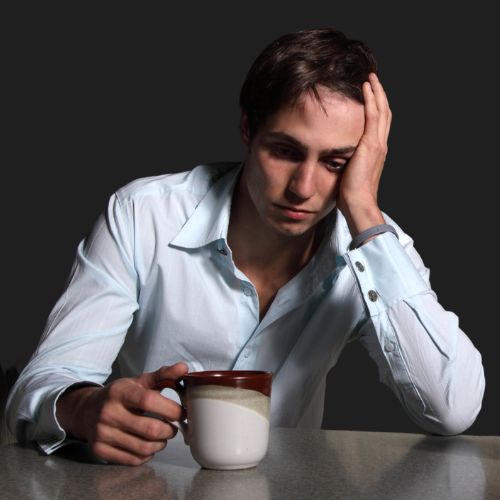
You avoid one uncomfortable conversation and get immediate relief. But now resentment grows. You say yes to keep the relationship smooth. But your schedule fills with things you did not actually choose. You stay quiet in a meeting to avoid exposure. But then you feel overlooked, frustrated, and less confident the next time.
This is why many people feel like they are betraying themselves in tiny ways all week long.
They are not weak. They are loyal to an emotional training they never examined.
And this is where a lot of overthinking comes from. People think they are struggling with decisions, but often they are struggling with the emotional consequences they have been taught to expect from certain decisions. The mind starts circling because it is trying to avoid an internal penalty.
- If I say no, will I be seen as selfish?
- If I speak clearly, will I be seen as rude?
- If I choose myself here, will I lose connection?
The choice is not hard only because of the facts. It is hard because of the meaning attached to the feeling.
Why your emotions can feel true and still be misleading
This is a subtle point, but it changes everything. An emotion can be sincere without being accurate.
Feelings are real, but they aren’t always based on truth. You can feel guilty without being guilty, unsafe without danger, or responsible for someone else’s mood without being responsible. the feelings you experience are completely real, even though the source of those feelings is fictional—or, even if it’s based on real events.
Many people have never separated intensity from accuracy. They assume that if a feeling is strong, it must be wise. But some strong feelings are simply well-practiced.
What gets repeated gets familiar. What gets familiar starts to feel like identity. Then a person says, “This is just how I am. I am a people pleaser. I am indecisive. I hate conflict. I always overthink.”
I like the saying, “You are not your thoughts, you are the one having those thoughts.” by the same token, “you are not your emotions, you are the one experiencing those emotions in that moment’
That distinction matters, because personality feels permanent. Learning can be updated.
A better question than “Why am I like this?”
When people are caught in these patterns, they often ask, “Why do I keep doing this?” That question keeps their attention on the very behavior they want to change. Where attention goes, experience often follows.

Instead, ask, “What does this emotion seem to promise me, or protect me from?” That shifts your thinking from judging the behavior to investigating it.
If guilt appears whenever you disappoint someone, perhaps guilt has been working as a connection-preserving tool. If confusion appears whenever a decision would require self-trust, perhaps confusion has been protecting you from the exposure of owning your choice.
If overwhelm appears the moment you try to set a boundary, perhaps overwhelm is the learned cost of becoming more defined.
Once you see the function, the pattern becomes less mysterious and begins to lose its power on you.
How to notice learned emotions in real time
You do not need to analyze your whole life to begin seeing this. Start with one ordinary moment.
Notice a choice you keep making that leaves you frustrated. Maybe you keep agreeing too quickly, apologizing too often, delaying a decision, avoiding a conversation, or checking out when pressure rises.
Then pause and ask, “What emotion shows up right before I do this?” Not the big story. The immediate emotion.
It may be guilt, pressure, fear, awkwardness, urgency, or even a strange sense of duty. Then ask, “What does this emotion seem to be telling me will happen if I choose differently?”
This is where people often find the hidden rule. They are often in If X then Y form.
- If I say no, I’ll hurt them.
- If I slow down, I’ll fall behind.
- If I speak plainly, I’ll create problems.
- If I don’t fix this, I’m failing.
Now you are getting somewhere. Not because you found a technique, but because you found the assumption driving the emotion. You can ask yourself, “Where did I learn this?” “How do I know If I do (or don’t do) this, that will happen (or not happen)?”
Changing the pattern starts with seeing the misunderstanding
Most lasting change does not begin with forcing better behavior. It begins when you see that the old emotional rule is based on a misunderstanding.

What if saying no doesn’t create rejection? What if it simply reveals which relationships depend on your over-functioning?
What if discomfort in conflict isn’t danger? What if it’s a sign you’re no longer abandoning yourself to keep the peace?
What if guilt after setting a boundary doesn’t mean you were wrong? What if it’s your nervous system adjusting to a healthier definition of respect?
This is why insight matters so much. If you only try to act differently while still believing the old emotional meaning, the change feels like a fight. But when the misunderstanding becomes visible, the behavior begins to shift with less force.
You stop treating every uncomfortable feeling as an instruction. That alone changes a person’s life.
If your daily choices keep taking you somewhere you don’t want to go
Pay attention to the feelings you automatically obey.
Not every emotion is a warning. Not every wave of guilt is proof. Not every hesitation means stop. Some emotions are old training wearing the clothes of present truth.
If your choices keep producing the same frustration, conflict, or self-doubt, the issue may not be lack of discipline. It may be that you are still listening to emotional rules you never consciously agreed to.
When you begin to see that clearly, better choices stop feeling like self-betrayal and start feeling like honesty.
And if you are tired of circling the same patterns alone, this is exactly the kind of deeper clarity I help people find in coaching – not by giving you more rules to manage yourself, but by helping you see what has been quietly shaping your decisions all along.

I am a Master Trainer of NLP & Hypnosis and a Personal Human Detective. I am the founder of The First Institute of Dynamic Learning, LLC. I study patterns of thinking, emotion, and behavior, and help people gain clarity through them.
My work is designed for mentally healthy individuals seeking clarity and personal development, and is not a replacement for therapy, medical treatment, or psychiatric care. Anyone currently working with a mental health professional should continue doing so.