

A therapist once told me, “I learned the induction, the deepener, the suggestions, even the voice tone. But in the room, something still felt mechanical.” That sentence says a lot.
Many professionals go looking for hypnosis training for therapists as if they are shopping for a new tool. A method. A sequence. A better script. What they often need is not another layer of technique, but a better eye for what is happening in front of them.
Hypnosis works best when it stops being a performance and starts becoming a precise response to how a person is already organizing their experience.
That is the part many trainings miss.
WHAT GOOD HYPNOSIS TRAINING FOR THERAPISTS SHOULD REALLY TEACH
If a training leaves you better at sounding hypnotic but not better at noticing patterns, it has taught you less than it promised.
The real value of hypnosis is not in fancy language. It is in learning how attention works, how meaning gets constructed, and how people talk themselves into states they do not even realize they are maintaining. Fear, hesitation, looping thoughts, emotional reactions, internal conflict – people are not just having these experiences. They are participating in them through perception, expectation, memory, and interpretation.
A useful hypnosis training helps you spot that process in real time.
You begin to notice when a client is responding to an image rather than a fact. You hear when their language is vague in a way that keeps them stuck. You see the moment they confuse a prediction with reality, or a feeling with truth. At that point, hypnosis is no longer just about relaxation or suggestion. It becomes a way of helping someone shift the structure of an experience.
That is a very different standard from simply learning how to “put someone under.”
THE PROBLEM WITH SCRIPT-FIRST TRAINING
I have met many intelligent, caring professionals who were taught hypnosis in a very rigid way. Step one, say this. Step two, slow your voice. Step three, count backward. Step four, insert the desired suggestion.
It sounds neat on paper. Human beings rarely cooperate with neat systems.
I heard someone telling their student to ‘hold the script in your hand to protect yourself from going in trance’ … this is a very bad idea. It’s like telling them, hypnosis is good for others, but not for you.
The issue with script-first training is not that scripts are useless. They can be helpful early on. The issue is that many people start leaning on the script because they do not yet trust their observation. The result is predictable. They are busy remembering what comes next while missing what is happening now.
One person needs direct language because they are overloaded and want clarity. Another needs permissive language because they resist pressure the moment they feel managed. One responds strongly to sensory imagery. Another barely processes that way at all and responds better to logic, metaphor, or contrast. If your training does not teach you how to calibrate these differences, it may leave you technically informed and practically clumsy.
This is where many helping professionals get frustrated. Not because hypnosis does not work, but because they were taught it as a performance instead of a conversation with structure.
HYPNOSIS IS OFTEN ALREADY HAPPENING
I When people ask, ‘can you hypnotize me’ I often tell them, they do not need hypnosis, they need to be dehypnotized. Because most people are already in trance.
Not the stage-show version. I mean the ordinary human kind.

They are absorbed in a feared future. They are rehearsing rejection before it happens. They are reliving an old moment as if it is still issuing commands in the present.
They are staring at one interpretation of events and calling it reality. In that sense, many struggles are hypnotic. Repetition narrows attention.
Emotion strengthens suggestion. Identity wraps around the whole thing and says, “This is just who I am.”
When you understand this, your role changes. You are not creating hypnosis from scratch. You are noticing the trance already running and helping interrupt, soften, or reorganize it.
Good training should teach that. It should make you more sensitive to natural trance, conversational influence, expectation, and the hidden assumptions inside language. Without that, hypnosis gets reduced to a technique instead of being understood as a living process already woven into human behavior.
WHAT TO LOOK FOR IN HYPNOSIS TRAINING FOR THERAPISTS
I would pay close attention to what a training emphasizes in the first few hours. That usually tells you everything.
If the focus is mostly on authority, mystery, or dramatic techniques, be careful. If the trainers seem more interested in looking impressive than helping you think clearly, be careful. If the method depends on exaggerated claims, guaranteed outcomes, or vague talk that sounds profound but explains nothing, be very careful.
Stronger training usually has a different feel. It helps you understand attention, suggestibility, language patterns, rapport, state shifts, and the mechanics of inner experience. It teaches you how to listen more precisely. It shows you how to adapt rather than force. It gives you supervised practice, not just information. And it makes room for a simple truth: some approaches fit some people better than others.
That last point matters. A mature practitioner does not fall in love with a method more than the person in front of them.
I also think good training should make you ethically quieter, not louder. The more you understand influence, the less casual you become with it. You become more careful with assumptions, less eager to impose meaning, and more respectful of the client’s own inner logic. That is not weakness. That is discipline.
THE BEST PRACTITIONERS LEARN TO SEE, NOT JUST DO
There is a difference between doing hypnosis and seeing hypnotic patterns.
Doing hypnosis is procedural. You know the steps. You can guide attention. You can use repetition, pacing, embedded suggestion, imagery, and state language.

Seeing hypnotic patterns is subtler.
You catch the exact phrase that keeps a person trapped in the same loop. You notice when their certainty is built on imagination rather than evidence.
You hear the contradiction between what they say they want and the internal picture they keep feeding.
You recognize that the problem is not always the emotion itself, but the interpretation creating it.
This is where the work gets interesting.
Because once you can see the structure, your interventions become simpler. Sometimes far simpler. You do not need to impress people. You need to notice what they have not noticed. A well-placed observation can break more trance than ten minutes of polished language.
That is one reason I teach communication, hypnosis, and human behavior together. Separating them creates artificial skill. Real change work happens when your language matches your observation and your observation matches the person in front of you.
I often remind new coaches and therapists, ‘your session is not about you, it is about your clients. Stop worrying about how you look, sound, feel and stay in the observer mode.
TRAINING SHOULD CHANGE THE PRACTITIONER TOO
This point gets overlooked. Hypnosis training is not only about what you can do with clients. It should also expose your own habits of perception.
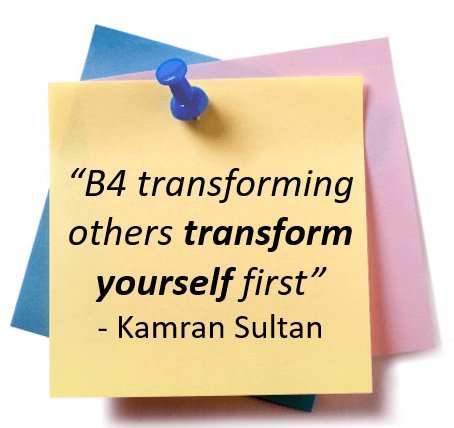
If you are easily intimidated by strong emotion, that will shape your work. If you rush to reassure, over-explain, rescue, or search for the perfect intervention, that also shapes your work. If you quietly need to be the expert in the room, clients will feel that pressure even if you never say it.
The best training does not just hand you techniques. It confronts your blind spots.
You begin noticing how often people, including professionals, mistake confidence for clarity. You see how quickly a label can freeze curiosity. You realize that trying too hard to help can make you less able to observe. These are not small corrections. They affect everything.
There is wisdom in learning to slow down enough to see what is actually driving an experience before rushing to change it. Sometimes what looks like resistance is self-protection. What looks irrational makes perfect sense once you catch the hidden assumption underneath it. What looks deeply rooted may be held together by one misunderstood idea.
That kind of insight makes hypnosis more intelligent and far less mechanical.
A BETTER QUESTION TO ASK BEFORE YOU ENROLL
Most people ask, “Will this training teach me hypnosis?” because most likely it will, often on day 1. But this is like, when you learn to drive, you learn how to start a car – but to drive safely, is a totally different set of skills.
A better question is, “Will this training help me understand people more deeply?”
If the answer is yes, the hypnosis will become more natural. Your words will have better timing. Your interventions will become cleaner. You will stop relying so heavily on memorized structure because you will understand what the structure is for.
And if the answer is no, you may still collect techniques, certificates, and terminology, but your work may remain oddly flat. Competent on the surface. Thin underneath.
I have found that the most effective practitioners are rarely the most theatrical. They are usually the ones who can sit with another human being and notice the invisible logic shaping their experience. Then they speak to that logic with precision.
That is what I would want from hypnosis training for therapists. Not more performance. More perception. Not more jargon. More understanding. Not more promise. More truth.
If you are considering training, do not just ask what method you will learn. Ask what kind of eyes it will give you. That question will save you time, money, and years of sounding skilled while missing the obvious.

I am a Master Trainer of NLP & Hypnosis and a Personal Human Detective. I am the founder of The First Institute of Dynamic Learning, LLC. I study patterns of thinking, emotion, and behavior, and help people gain clarity through them.
My work is designed for mentally healthy individuals seeking clarity and personal development, and is not a replacement for therapy, medical treatment, or psychiatric care. Anyone currently working with a mental health professional should continue doing so.