

Anyone researching life coach certification training eventually runs into the same thing: certificate walls stacked with acronyms of federations or boards one seal on top of another, like a résumé competition. It can sound official. It can even sound as though there is a central authority somewhere deciding which coaching certification is legitimate and which isn’t.
There isn’t.
It’s a common assumption among people exploring coach training that more logos, more seals, or a bigger-sounding federation name automatically means better training.
It doesn’t.
This isn’t a complaint about any coach or any particular certificate, nor is it about saying which coaching organization to choose or which certificate is “the best.”
It’s about explaining what is actually true about life coaching certification, so that anyone considering spending time and money on training or hiring a coach can make that decision based on real information rather than assumptions.
Life Coaching Is an Unregulated Industry
“Unregulated” has a specific meaning: no government agency federal or state licenses life coaches, sets a mandatory curriculum, or has legal authority to approve or shut down a coach training program.
Compare that to a licensed therapist, counselor, or psychologist. To use those titles in the USA, a person needs a state-issued license a specific degree, supervised clinical hours, a licensing exam, and ongoing oversight by a state board. Skip that process, and it’s illegal to practice.

As of this post Sept. 14, 2026 “Life coach” carries no such requirement anywhere in the country.
The same is true outside the mental-health field. A barber needs a state license to legally cut hair. A plumber needs a state license to legally work on a house.
Both require exams, fees, and ongoing inspection. “Life coach” requires none of it.
Anyone can complete a weekend program, receive a certificate, and call themselves a “Certified Life Coach” the next day, with no government body checking any of it before or after.
ProPublica’s reporting on the industry lays this out plainly: coaching remains “largely unregulated” even as the International Coaching Federation itself estimated the industry generated more than $4.5 billion in revenue worldwide in 2022. In the handful of states that have tried to draw a line, enforcement is thin Utah’s own licensing chief has said the potential for harm to vulnerable clients is “great enough that the government should step in,” yet citations against coaches who cross into therapy are rarely enforced even there. Most states have no rule at all.
This doesn’t automatically make coach training worthless. Serious, well-run certification programs exist, and plenty of coaches use them to build real skill. What it does mean is that the job of judging quality shifts entirely from a licensing board onto the person choosing the training or the coach. And it’s worth being direct about scope: a life coaching certificate, from any organization, is not a mental-health credential and doesn’t authorize diagnosing or treating a condition. That line belongs to licensed therapists, counselors, and psychologists.
So How Many Coaches and Schools Actually Exist?
Nobody has an exact number, and that’s part of the point. There’s no license to apply for, no single registry to join, and no agency tracking who opens a coach training program. Anyone with a curriculum and a webinar platform can start one tomorrow.
The organizations whose logos show up most often on coaching certificates each maintain their own separate membership rolls, and none publishes a verified count of total graduates worldwide, because none is required to. To give a sense of scale from what these organizations do publish: the International Coaching Federation (ICF) reports more than 50,000 members in over 150 countries; the Center for Credentialing & Education’s Board Certified Coach (BCC) credential has been issued to more than 3,900 coaches worldwide. The International Association of Coaching (IAC) and the National Board for Health & Wellness Coaching (NBHWC) each keep their own separate lists and don’t publish comparable totals.
Add the independent coaches with no certification at all, and the realistic count runs even higher.
The Truth About the Boards, Federations, and Associations
This is where most of the confusion lives. Names like “International Coaching Federation,” “National Board for Health & Wellness Coaching,” or “Center for Credentialing & Education” sound like they carry legal weight the way a state medical board or bar association does. They don’t, and it’s worth knowing exactly what they are instead.
- The International Coaching Federation (ICF) was founded in 1995 by Thomas J. Leonard. It’s a non-profit membership organization the largest and most recognized in the field not a government body. Its ACC, PCC, and MCC credentials mark different levels of documented coaching hours and training, not a license.
- The International Association of Coaching (IAC) was founded in 2003 also by Thomas J. Leonard, eight years after he started ICF. That means the same individual is behind the origin of two of the most-cited coaching credentials in the industry.
- The Center for Credentialing & Education (CCE) was established in 1995 as an affiliate of the National Board for Certified Counselors (NBCC). It administers the Board Certified Coach (BCC) exam and credential.
- The National Board for Health & Wellness Coaching (NBHWC) was founded in 2009 and, since 2019, has partnered with the National Board of Medical Examiners (NBME) the organization behind US medical licensing exams to administer its certification exam. That partnership makes the process more rigorous than most, but the result is still a private certification, not a government license, and it applies specifically to health and wellness coaching rather than life coaching generally.
As of this post, none of these is chartered, audited, or overseen by any government. None can revoke a professional license the way a real regulatory board can, because none of them issues a license in the legal sense they issue certificates.
Each sets its own number of required training hours, its own exam (if any), and its own definition of what “Certified,” “Associate,” or “Master” coach needs to demonstrate which is exactly why two people can hold similarly-named titles from two different bodies after very different amounts of actual training.
Why “More Certificates” Doesn’t Mean “Better Coaching”
This is the part that matters most for anyone evaluating a coach or a coach-training program. It’s become common for a single coach’s bio to list three or four certification logos, one from each organization above. It looks impressive. It is not the same thing as being more qualified.
Here’s why: because each of these organizations is independent and privately run, a coach can apply to several of them separately and receive a similarly-named credential from each one, without repeating the underlying training three or four times over.
Stacking certificates this way often reflects how many application fees someone paid, not how many hours of supervised, hands-on coaching they actually delivered. It’s as much a marketing decision as a training one.
That doesn’t mean every coach collecting multiple certificates is trying to mislead anyone. Many genuinely believe more logos signal more credibility, because that’s the story the industry has told for years. But once the facts are clear, a wall of three or four logos shouldn’t automatically outweigh a coach’s years of documented, real client work. Those are two different questions, and only one of them tells you anything about the quality of the coaching itself.
When a Credential Actually Matters and When It Doesn’t
It’s a fair question to ask when researching a coach: “Shouldn’t they be XYZ certified?” The honest answer is that it depends entirely on what’s being decided and for almost anyone hiring a personal coach directly, the answer is no.
There are a few narrow settings where one of these credentials functions as a gatekeeper not because any government requires it, but because a specific institution has chosen to require it internally:
- Corporate learning-and-development panels and executive-coaching platforms that broker contracts with companies often require an ICF credential as a vendor-approval filter.
- Health and wellness coaching inside hospital systems or insurance-reimbursement programs increasingly runs through NBHWC, because of its partnership with the National Board of Medical Examiners.
- Some liability insurers price coaching-specific policies differently depending on whether the coach holds a recognized certification.
- A handful of coach directories and referral platforms require a specific credential just to create a listed profile.
None of that describes a person deciding whether to hire a coach directly. Hiring a coach for one’s own life, career, or relationships isn’t a corporate procurement decision, an insurance claim, or a directory listing it’s a decision made on the strength of the coach’s actual approach, results, and experience with people in similar situations.
And because none of these letters come from a licensing exam any government stands behind, seeing them on a website doesn’t actually answer the only question that matters: has this person coached real people through real change, and how many, and for how long? A track record answers that directly. A logo doesn’t.
What Actually Matters, Then
Since no outside authority is checking quality on the client’s behalf, the useful questions change:
- How many hours of real, supervised coaching practice does the certification require not just self-study or lecture time?
- How many years has the coach actually been coaching, and how many clients have they worked with?
- Does the coach’s own training trace back to real, documented experience, rather than a single weekend course?
- Does the coach claim anything they shouldn’t like offering therapy, diagnosing a condition, or replacing a licensed mental-health professional? (They shouldn’t. Life coaching certification, from any organization, is not a substitute for licensed therapy or medical care.)
A certificate shows that someone paid for and attended a program. On its own, it doesn’t show whether the training was rigorous or the coach is any good. In a field with no regulator, that judgment call belongs to the person making the decision and now there’s enough information to make it.
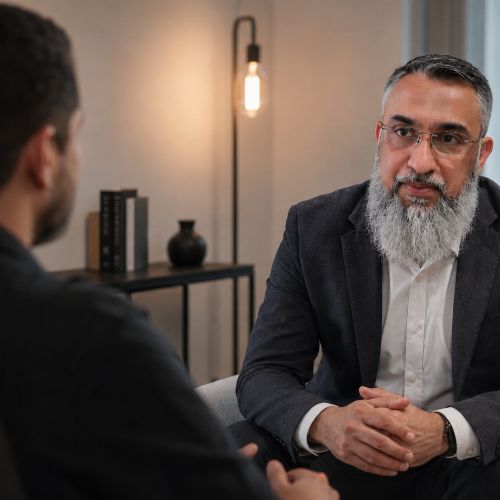
I am a Master Trainer of NLP & Hypnosis and a Personal Human Detective. I am the founder of The First Institute of Dynamic Learning, LLC. I study patterns of thinking, emotion, and behavior, and help people gain clarity through them.
My work is designed for mentally healthy individuals seeking clarity and personal development, and is not a replacement for therapy, medical treatment, or psychiatric care. Anyone currently working with a mental health professional should continue doing so.
Sources:
- ProPublica, “When Therapists Lose Their Licenses, Some Turn to the Unregulated Life Coaching Industry Instead”
- Wikipedia, “International Coaching Federation”
- International Association of Coaching, About IAC
- Center for Credentialing & Education, “What is a Board Certified Coach (BCC)?”
- Wellcoaches / NBHWC, “The NBHWC & National Standards — A Quick History”