

A person sits across from me and says, “I know what I should do. I just don’t do it.”
I’ve heard versions of that sentence for years. Smart people say it. Capable people say it. People who have read the books, taken the courses, tried to stay positive, and worked very hard on themselves say it.
That’s usually where the real conversation begins.
When people ask me what a transformational life coach is, they are often really asking a different question. They want to know why insight sometimes changes everything, while effort alone often changes very little. They want to know why they keep repeating patterns they can already describe in detail. And they want to know whether real change is about pushing harder or seeing something more clearly.
What is a transformational life coach really?
A transformational life coach helps you create change at the level beneath behavior.
That matters more than most people realize. Many people try to improve their lives by focusing on actions alone. They build routines, set goals, repeat affirmations, and try to stay disciplined. Sometimes that helps. Often it helps for a while. But if the underlying thinking, perception, and emotional patterning remain untouched, the old results tend to return wearing new clothes.
Transformational coaching is different because it looks at the structure behind the struggle. Not just what you do, but how you are seeing the situation. Not just the decision, but the hidden logic producing that decision. Not just the symptom, but the misunderstanding keeping it alive.
In my work, that often means listening very carefully to language, noticing emotional patterns, and identifying the private conclusions a person has been living inside without realizing it.
People are often trying to solve a problem they don’t actually have, while ignoring the one they do.
The difference between advice and transformation
A lot of coaching is built around strategy. There is nothing wrong with strategy. If someone needs structure, accountability, or help organizing action, practical coaching can be useful.
But transformation is not the same as advice.

Advice tells you what to do. Transformation helps you see why you have been unable, unwilling, or internally conflicted about doing it. Advice works on the surface. Transformation works on the frame through which you interpret yourself, other people, and the world.
This is why two people can hear the same excellent advice and get completely different results. One feels clear and moves. The other feels pressure, resistance, self-doubt, or confusion. The difference is rarely intelligence. It is usually perception.
A transformational life coach pays attention to that invisible territory.
What a transformational life coach actually helps with
People often come in thinking they need confidence, motivation, clarity, better boundaries, better relationships, or a better business mindset. Sometimes that is true. But very often those labels are only the outer layer.
Underneath, there may be a learned pattern of second-guessing.
- A fear of being misunderstood.
- An identity organized around pleasing others.
- A private rule that says success creates risk.
- A habit of mentally arguing with reality.
- A tendency to confuse feelings with facts.

These things do not always announce themselves directly. They show up in hesitation, procrastination, emotional overreactions, repeated relationship dynamics, inconsistent performance, and that exhausting feeling of knowing better but not living better.
A transformational coach helps expose those patterns, not to make you dependent on coaching, but to help you recognize how your experience is being created from the inside.
That recognition can change behavior far more quickly than years of trying to force yourself into a better version of the same misunderstanding.
What is a transformational life coach not?
This is where people get confused, and the distinction matters.
A transformational life coach is not simply a cheerleader. Encouragement has its place, but encouragement without insight can become emotional sugar. It feels good briefly and changes very little.
It is also not just someone who gives you a morning routine, asks about your goals, and tells you to think bigger. Again, there is a place for performance coaching. But if the deeper issue is the way you interpret failure, conflict, rejection, uncertainty, or your own internal experience, surface tactics may only decorate the pattern.
It also depends on the coach. Some use the word transformational because it sounds powerful. Others truly work at the level of identity, perception, language, and emotional patterning. Those are not the same thing.
This is why choosing the right coach matters more than choosing the most impressive label.
How transformational coaching works
In my experience, meaningful change often begins with investigation. Not analysis for the sake of analysis. Investigation with a purpose.
- What are you believing here?
- What are you assuming?
- What emotional meaning have you attached to this event, this person, this failure, this future?
- What private narrative has become so familiar that you no longer notice it is a narrative?
Once that becomes visible, people often experience relief and clarity very quickly. Not because they have been fixed, but because they are no longer trapped inside an unquestioned interpretation.
From there, the work may include conversation, pattern interruption, shifts in language, deeper inquiry, and sometimes hypnosis where appropriate. Hypnosis, when used skillfully, is not magic and it is not mind control. It is simply one way of helping a person engage with the patterns operating below their usual conscious chatter.
The goal is not to impose a new personality. The goal is to help you see more clearly, respond more intelligently, and stop being run by patterns you mistake for truth.
Who benefits most from this kind of work
The people who benefit most are often not beginners. They are frequently thoughtful, capable adults who have already done a lot of work on themselves.
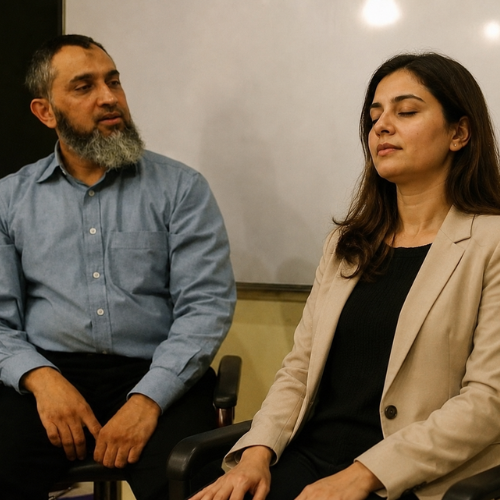
They may be professionals, business owners, parents, coaches, or therapists. They are often functioning well on the outside while carrying recurring frustration on the inside. They may have achieved success and still feel stuck in certain areas. Or they may be tired of repeating cycles they can explain but cannot seem to interrupt.
These people usually do not need more information. They need a more accurate understanding of what is actually creating their experience.
That said, transformational coaching is not for everyone. If someone wants quick tips, external motivation, or a rigid step-by-step formula, this may feel too confronting. Real transformation asks for honesty. It asks you to notice that some of what feels true may only feel familiar.
How to know if a transformational life coach is right for you
A good question is not, “Can this person help me feel better today?” A better question is, “Can this person help me see what I have been missing?”
Look for someone who can listen beyond your words. Someone who does not rush to advice. Someone who can challenge you without performing superiority. Someone who understands behavior, language, and emotional patterns deeply enough to recognize what is driving the issue beneath the issue.
You should also pay attention to whether their work creates dependency or clarity. Good transformational coaching should help you become less confused about yourself, not more impressed by the coach.
And yes, chemistry matters. So does precision. Warmth without depth can become comfort. Depth without warmth can become performance. The best work usually contains both.
Why this matters more than people think
Most people are trying to change their lives while preserving the exact lens that keeps producing the same life.
That is the hidden problem.
They want better decisions without examining the thinking behind those decisions. They want confidence without seeing the misperceptions feeding insecurity. They want peace while continuing to argue with every uncomfortable feeling. They want new outcomes while remaining loyal to old conclusions.
A transformational life coach helps bring those loyalties into the light.
And once you see them clearly, something important happens. You stop treating your patterns as personality. You stop assuming every emotional reaction is a reliable guide. You stop confusing repetition with truth.
That is where change starts to become real.
Not because someone handed you a better script, but because you finally saw the machinery behind the one you were already living.
If you have been working hard on yourself and still finding the same walls in different rooms, that does not always mean you need more effort. Sometimes it means you need a better investigation.

I am a Master Trainer of NLP & Hypnosis and a Personal Human Detective. I am the founder of The First Institute of Dynamic Learning, LLC. I study patterns of thinking, emotion, and behavior, and help people gain clarity through them. My work is designed for mentally healthy individuals seeking clarity and personal development, and is not a replacement for therapy, medical treatment, or psychiatric care. Anyone currently working with a mental health professional should continue doing so.